
How to Start a Car Detailing Business in 2026?
The Complete Startup Guide
People are holding onto their cars longer than ever, nearly 13 years on average and when they’re not buying new, they’re paying to keep what they have looking sharp.
That’s why the U.S. car detailing market is on track to hit $20.2 billion.
The best part?
You can start a car detailing business for as little as $500. No fancy shop needed. Solo mobile detailers regularly pull in $50,000 to $100,000 a year, and larger operations can clear $75,000+ per month.

At Detailer Systems, we’ve helped hundreds of car detailers launch and grow their businesses with done-for-you marketing automation. This guide shares everything we’ve learned about what separates thriving detailing businesses from those that struggle.
Is Starting a Car Detailing Business Worth It in 2026?
Before you invest your time and money, let’s look at whether a car detailing business makes sense for you.
But numbers only tell part of the story.
Starting a car detailing business requires patience, attention to detail, and genuine enjoyment of hands-on work.
Why It’s Attractive
Low startup costs
Start mobile with around $500 in equipment. Test the market before making larger investments.
High profit margins
Solo operators achieve 50-70% margins. Ceramic coating generates $500-$2,000 per job with only $50-$100 in materials.
Flexible schedule
Control your hours, choose clients, scale at your pace. Works as a side hustle or full-time business.
Recurring revenue
Maintenance plans create predictable income. Loyal customers return every few weeks.
Premium service demand
Ceramic coatings, PPF, paint correction—consumer awareness is growing and they’ll pay for quality.
Challenges to Consider
Physical demands
Hours on your feet, bending, reaching, working in various weather conditions. This isn’t a desk job.
Seasonal fluctuations
Demand peaks in spring/summer, drops in winter. Plan for slower months or develop year-round strategies.
Competitive market
Over 16,000 businesses in the U.S. alone. You’ll need to differentiate on quality and service.
Learning curve
Paint correction, ceramic coating, PPF installation—advanced services take months to master properly.
Customer acquisition
Building a client base takes time. Marketing, reviews, and word-of-mouth don’t happen overnight.
Demand peaks in spring/summer. Membership programs help stabilize winter revenue.
Source: Grand View Research →If you’re comfortable with these realities and excited about the opportunity—
Let’s build your business.
Step 1
Choose Your Car Detailing Business Model
Your business model shapes everything from startup costs to daily operations.
Most new detailers choose one of three primary approaches, each with distinct advantages.
Mobile Car Detailing
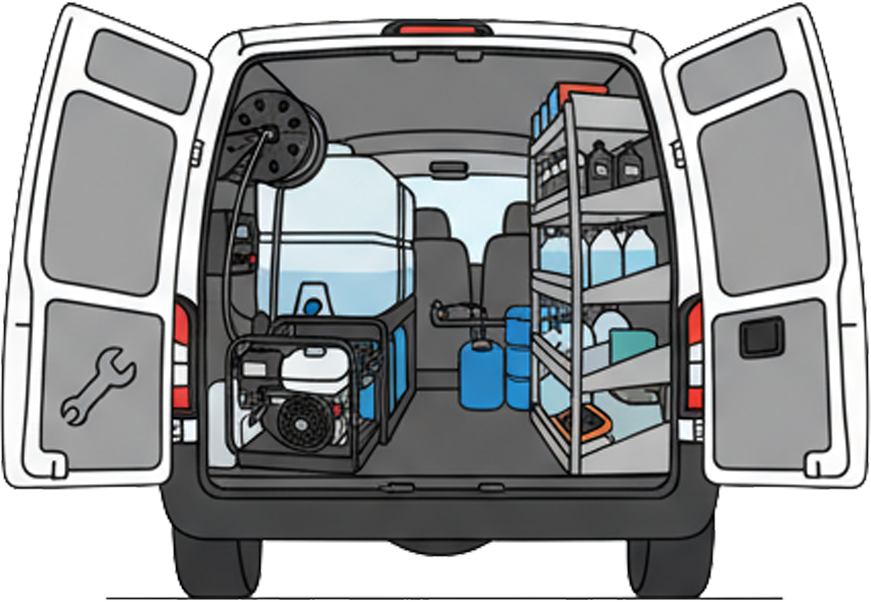
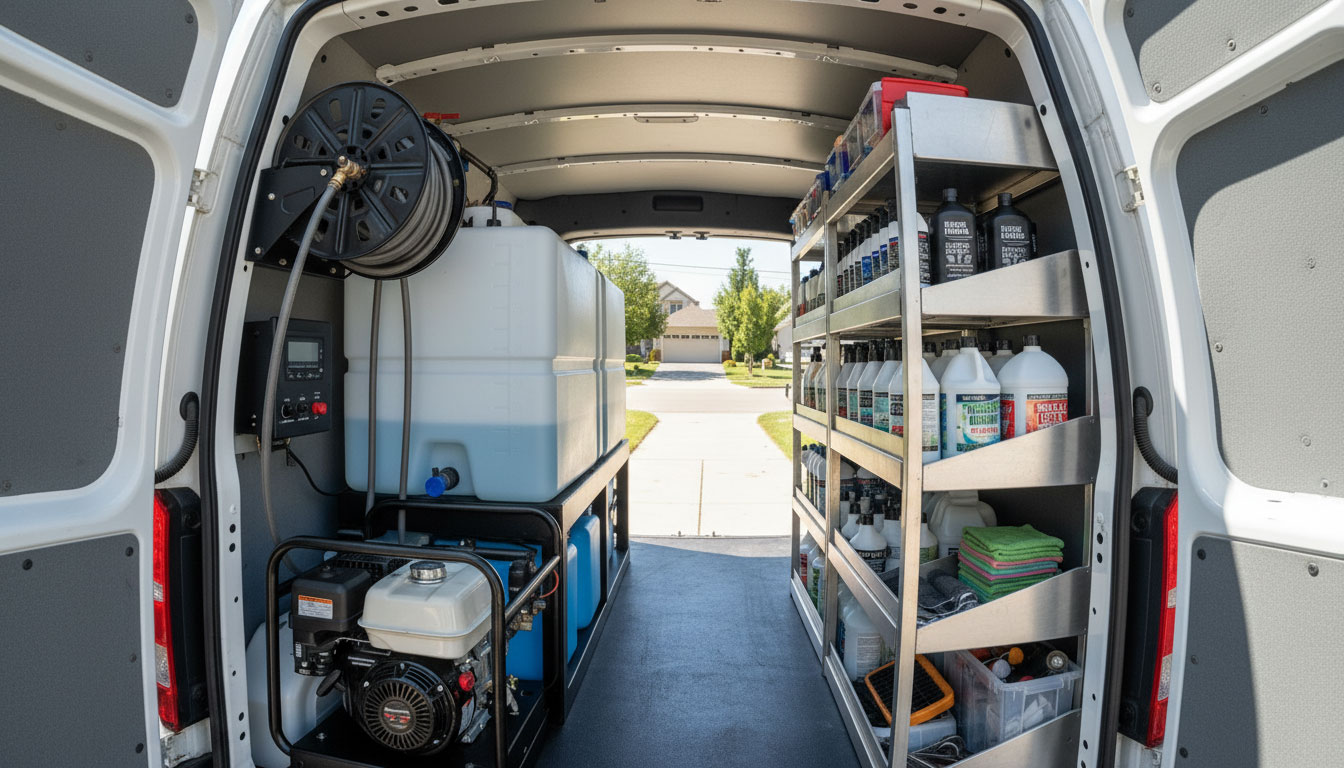
Mobile detailing is the most popular way to break into the industry. You bring your equipment and expertise directly to customers at their homes or workplaces, eliminating the need for a physical location.
Startup costs stay low because you avoid rent, utilities, and major buildout expenses. A basic mobile setup requires a reliable vehicle, portable equipment, and your supplies. Many detailers start with $3,000 to $10,000 invested in a professional mobile rig.
Flexibility defines the mobile model. You can serve residential clients on weekdays and tackle commercial accounts or fleet vehicles on evenings and weekends. Office park details during lunch hours and residential driveways on Saturdays give you multiple revenue streams.
Revenue potential for solo mobile detailers ranges from $5,000 to $15,000 per month depending on your market, pricing, and how many hours you work. Industry data shows profit margins of 60-80% for well-run mobile operations.
What You’ll Need for Mobile
Fixed-Location Detailing Shop
Higher investment. Higher ceiling.
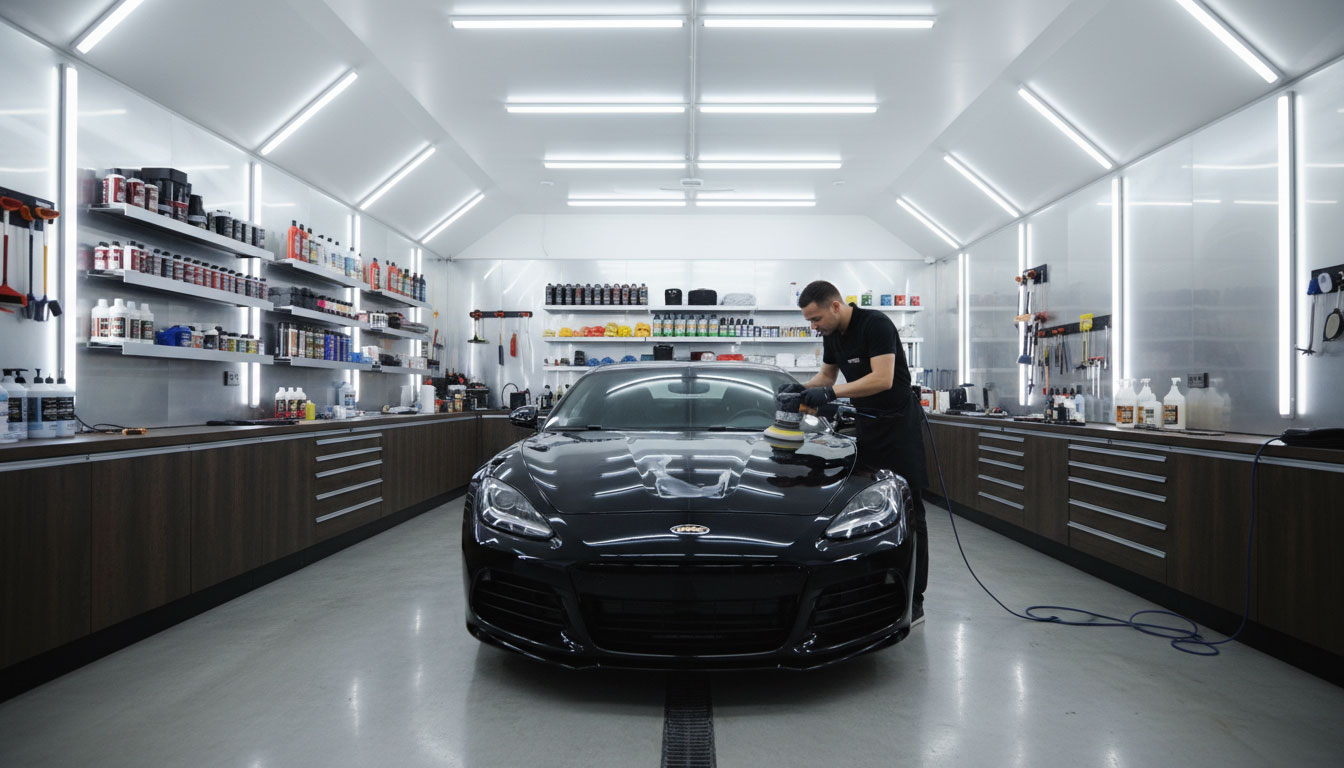
Opening a dedicated shop allows you to offer higher-end services and handle more volume, but it comes with significantly higher startup costs and ongoing expenses.
A controlled environment for premium work like paint correction and ceramic coating, the ability to install larger equipment, and a professional presence that attracts certain customer segments.
Typically range from $20,000 to $100,000+ depending on location, buildout requirements, and equipment. Monthly expenses include rent, utilities, insurance, and potentially employee wages.
Adequate space for vehicles, accessible entrances for large vehicles, proximity to target customers, zoning compliance, and water access and drainage capabilities.
- Experienced detailers ready to scale
- Advanced services requiring controlled environments
- Entrepreneurs with sufficient capital
Hybrid Model
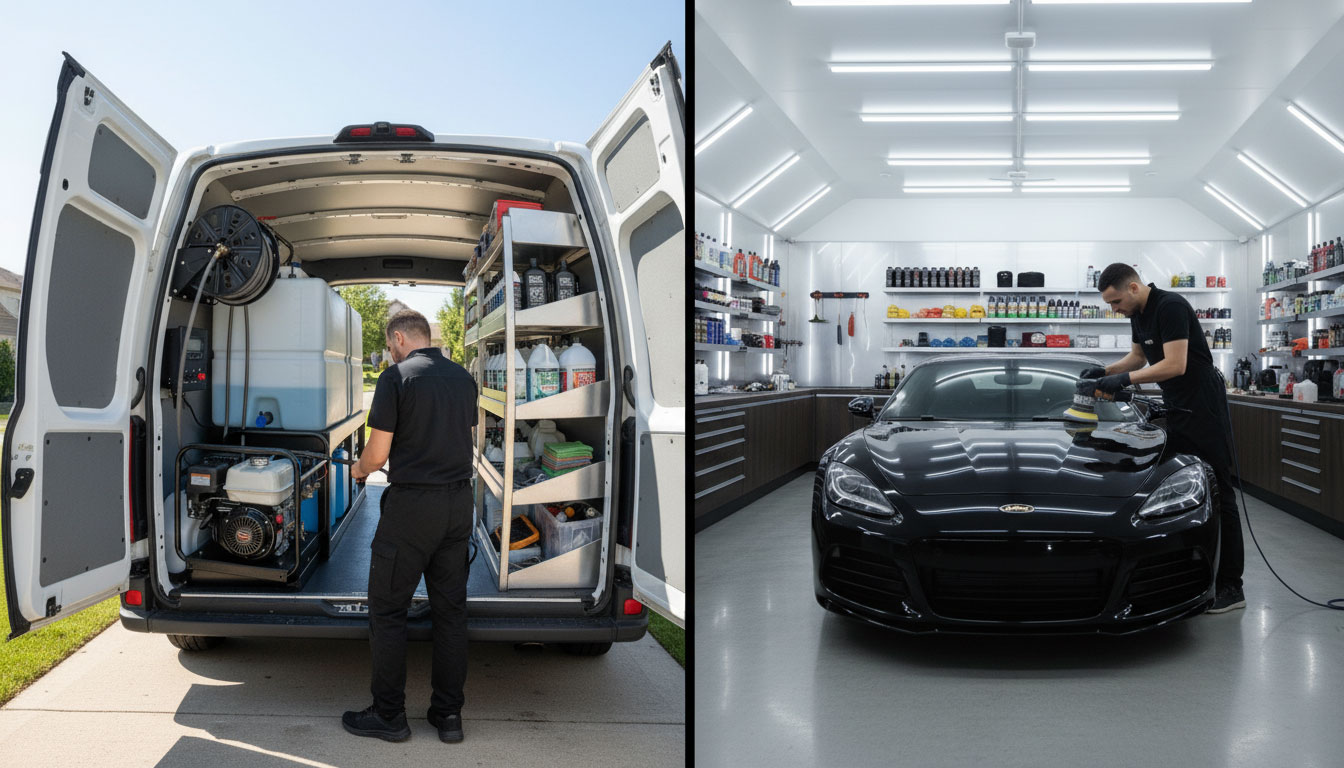
Many successful detailers combine mobile services with a shop presence. Operate primarily as mobile while maintaining a small garage for premium services or inclement weather work.
Specialty Niches to Consider
Carving out a niche can help you stand out from competitors and command premium pricing.
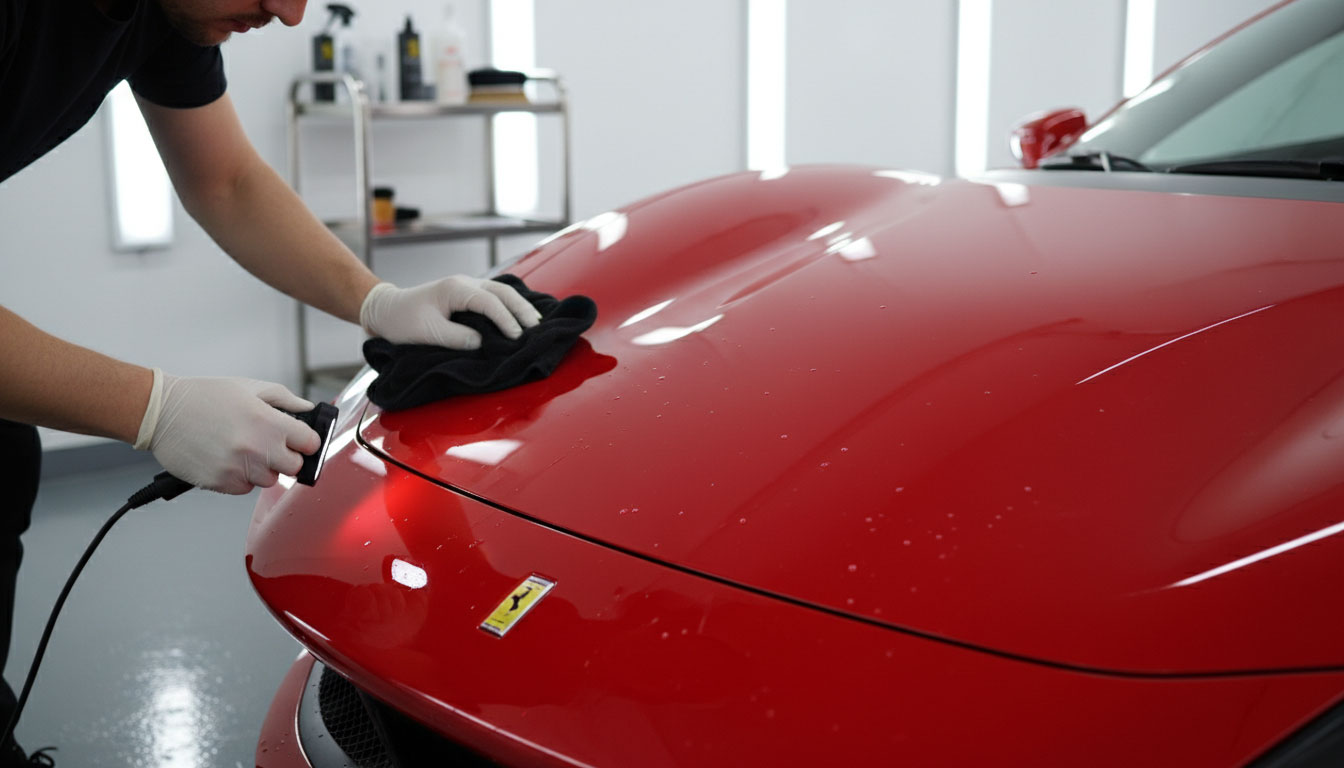
Luxury & Exotic Vehicles
Owners willing to pay premium for careful, knowledgeable service
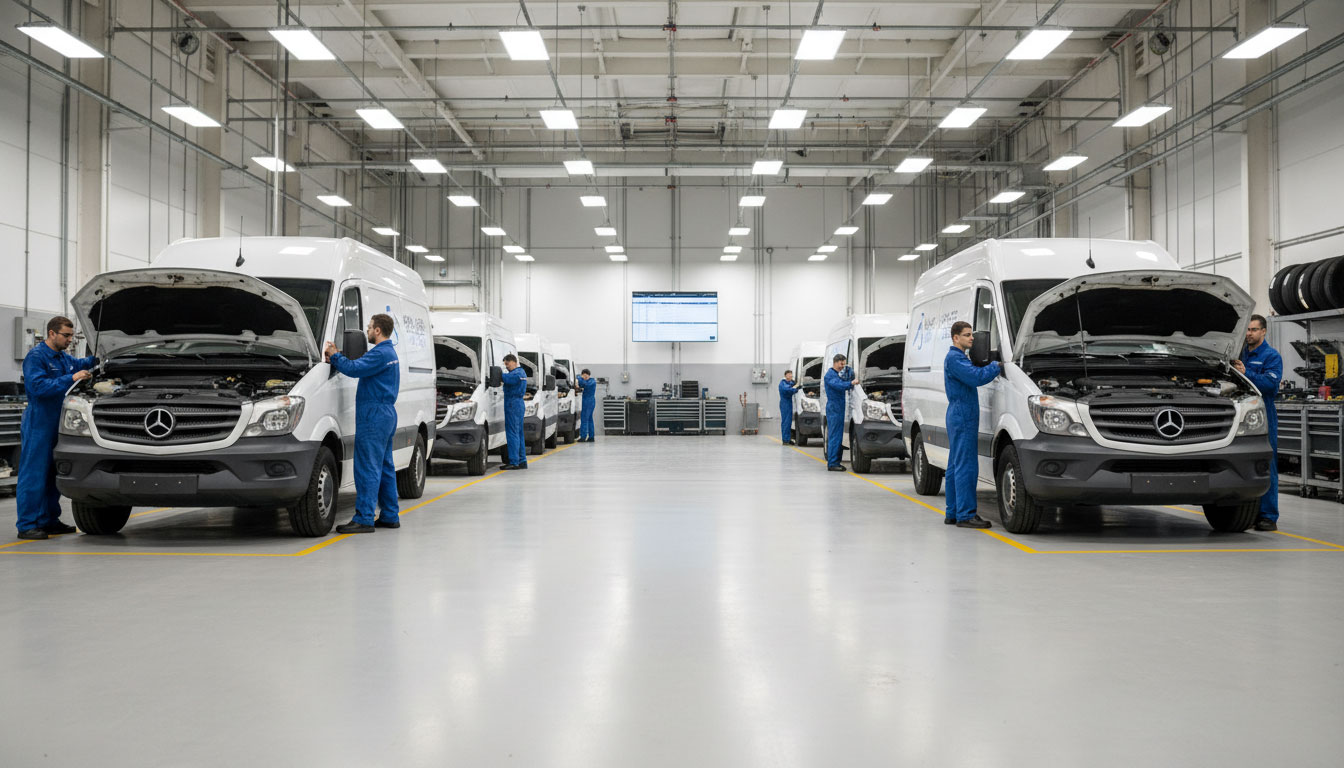
Fleet & Corporate
Consistent volume, recurring revenue
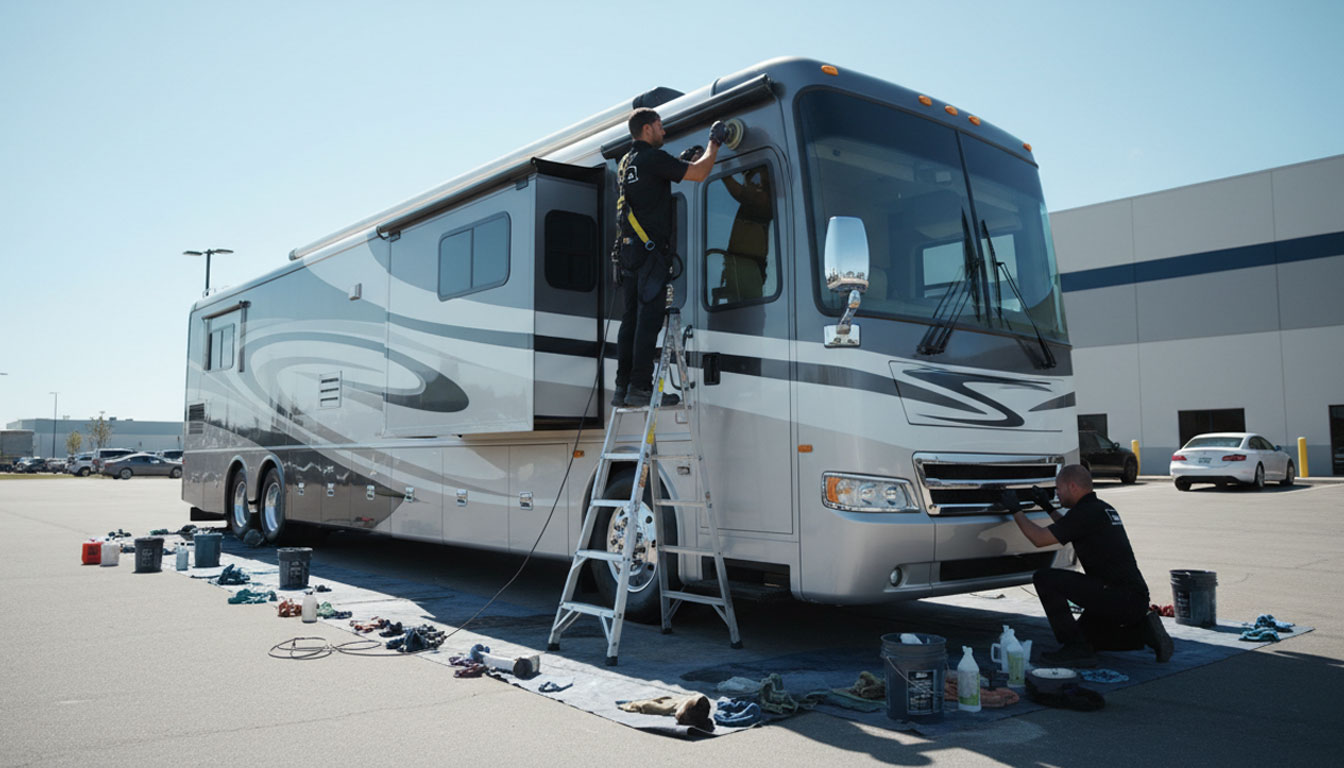
RV & Boat Detailing
Higher ticket prices per job
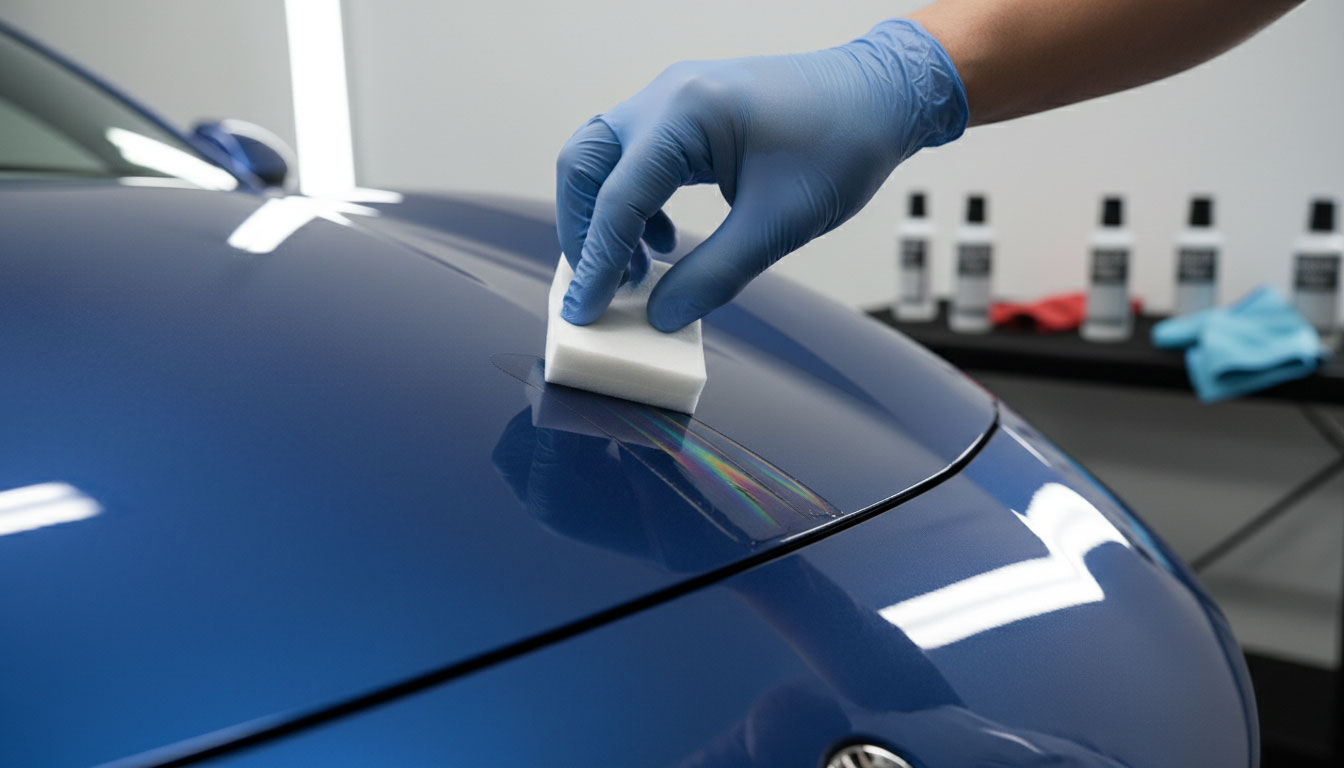
Ceramic & PPF
Premium positioning, high margins
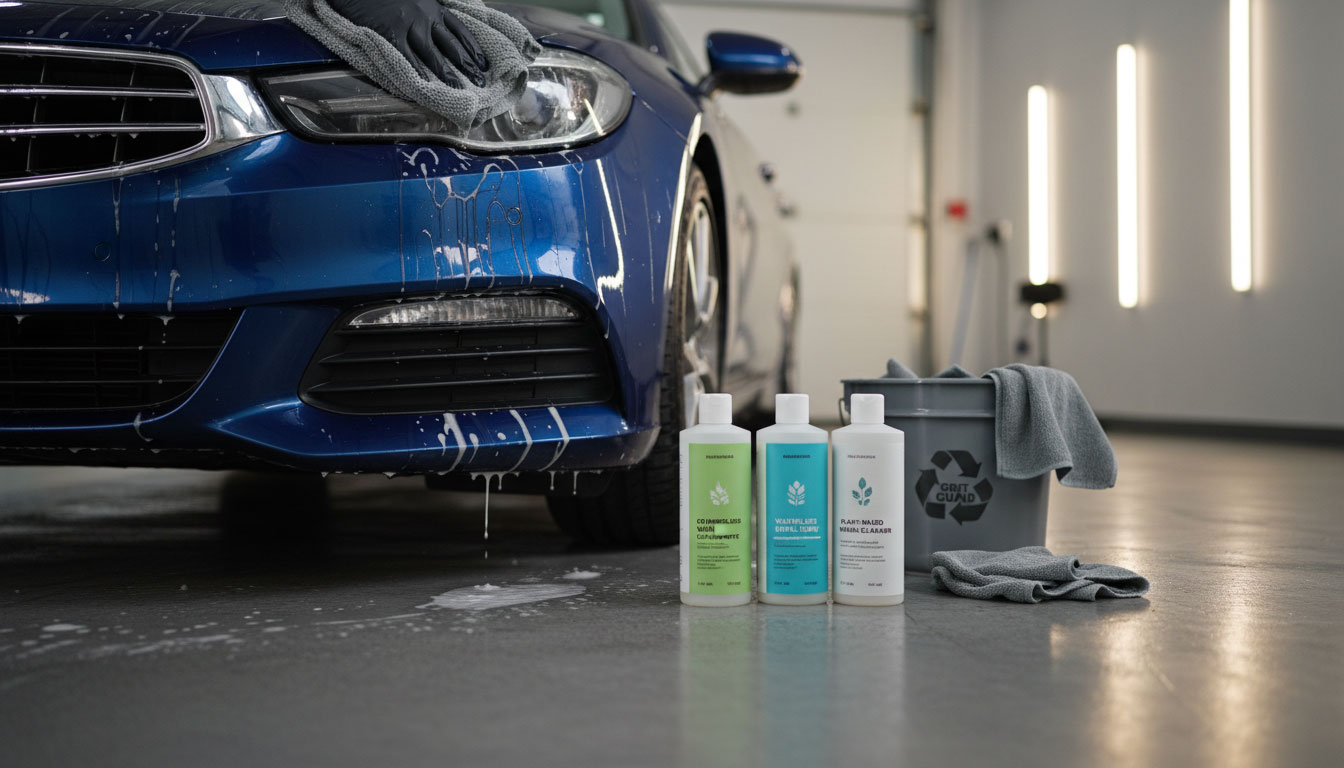
Eco-Friendly Detailing
Essential in water-restricted areas
Step 2
Master the Skills You Need
You need to provide top-notch detailing services to succeed in this business.
That means developing your skills through hands-on experience and continuous learning.
Core Detailing Techniques to Learn
Start by mastering the fundamentals that form the foundation of every detail job.
More than spraying and wiping. Learn proper techniques that avoid scratching paint, including the two-bucket method, correct wash mitt usage, and safe drying procedures.
Removes bonded contaminants that washing alone can’t eliminate. Clay bar treatment lifts embedded dirt and grime, leaving paint smooth and ready for polishing.
Addresses swirl marks, light scratches, and defects. Using a dual-action polisher with various compounds and pads, you’ll restore paint clarity and depth.
From thorough vacuuming to steam cleaning seats and carpets. Master extracting stains from upholstery and leaving interiors looking and smelling fresh.
Understanding different materials and appropriate treatments. Leather needs cleaning and conditioning to prevent cracking, while fabrics require specific approaches.
Adds value to your service menu. Many customers appreciate a clean engine compartment—it’s a straightforward upsell opportunity.
Premium Services Worth Learning
Services that significantly boost your earning potential
Once you’ve mastered the basics, premium services become your primary revenue drivers. These high-margin offerings command premium prices and build customer loyalty.
Ceramic Coating Application
$500–$2,000These liquid polymer coatings bond chemically with vehicle paint, providing long-lasting protection and a stunning shine. Graphene-infused coatings now offer superior durability and heat resistance.
Highest margin servicePaint Protection Film (PPF)
$800–$5,000+Physical barrier against rock chips, scratches, and road debris. Once reserved for luxury vehicles, PPF demand has grown across all segments.
Headlight Restoration
$50–$150Quick revenue opportunity. Foggy, yellowed headlights are common on older vehicles—restoration improves both appearance and nighttime safety.
Odor Removal & Ozone
$70–$150Addresses problems owners desperately want solved. Ozone generators eliminate tough smells from smoke, pets, and other sources.
How to Get Training
Multiple pathways exist for developing your detailing skills.
Online Courses & YouTube
Accessible, often free education. Channels dedicated to professional detailing demonstrate techniques, product reviews, and business advice. Works well for self-motivated learners.
Apprenticeships
Hands-on experience under experienced guidance. Approach local shops about informal arrangements where you work in exchange for learning the craft.
Professional Certification
Organizations like the International Detailing Association (IDA) validate your expertise and differentiate you from competitors. Various certification levels available.
Hands-On Practice
Essential regardless of how you learn. Start with your own vehicle, then family and friends’ cars. Take quality before/after photos to build your portfolio.
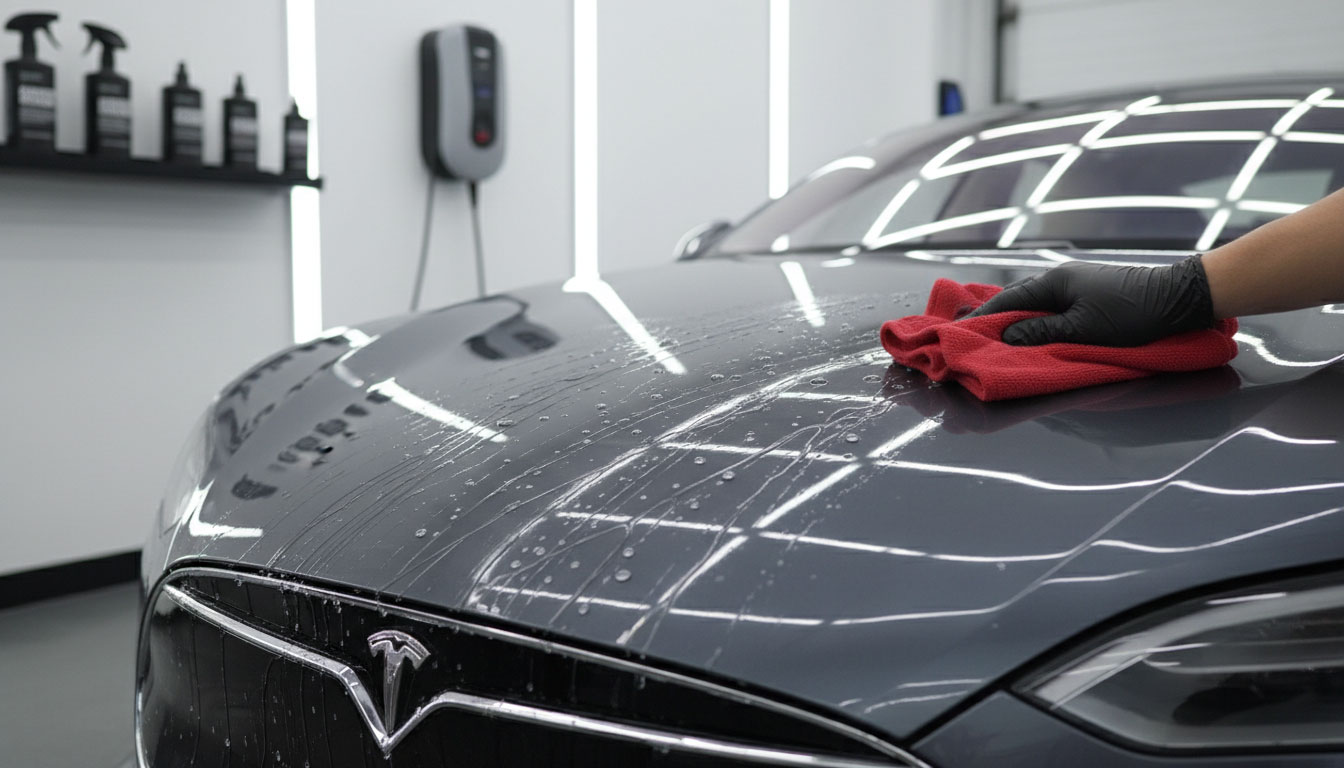
2026 Industry Trends
New technologies and techniques shaping the industry
The detailing industry continues evolving rapidly. Staying ahead of these trends positions you as a forward-thinking professional.
Graphene Coatings
The cutting edge of paint protection. Superior water-spot resistance, thermal conductivity, and durability compared to traditional ceramic coatings—increasingly popular among premium detailers.
Waterless Wash Systems
Address water restrictions and environmental concerns. Using high-lubricity sprays and microfiber towels, these systems reduce water usage by up to 90% while delivering excellent results.
Electric Vehicle Specialization
Positions you for a growing market segment. EVs have unique interior materials and specific care requirements that knowledgeable detailers can address.
Step 3
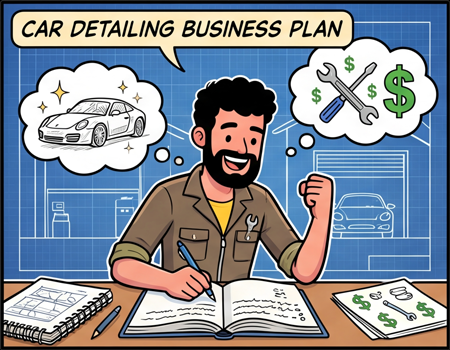
Write a Car Detailing Business Plan
A business plan keeps you on track as you launch and serves as your guide for decision-making.
It doesn’t need to be a 50-page document, but it should cover the essential elements.
Start with a clear statement of your business concept.
Define what type of detailing business you’re starting, who you’re serving, and what makes your approach valuable. Include your revenue goals and realistic timeline for achieving them.
Market Analysis
Research your local market before setting prices or marketing your services.
Analyze Your Competition
Check Google Maps, Yelp, and Facebook for other detailers in your area. Note their pricing, services, reviews, and how they present themselves. Look for gaps you can fill—whether that’s mobile service availability, premium offerings, or underserved customer segments.
Identify Your Target Customers
Industry data indicates that higher-income households, particularly those earning over $150,000, represent the greatest demand for car detailing services. However, your specific market may offer opportunities with different demographics. Consider factors like vehicle types in your area, proximity to luxury car dealerships, and local economic conditions.
Determine Pricing Benchmarks
Research what competitors charge. Platforms like Thumbtack and Angi show average rates for detailing services in specific areas, helping you price competitively while maintaining profitability.
Services and Pricing Strategy
Define exactly what services you’ll offer at launch. Most new businesses start with a few core packages and expand from there.
- Basic exterior wash
- Interior cleaning
- Full detail (both combined)
- One or two specialty add-ons
Combine related services at a single price
Good-better-best options at increasing price points
Marketing Plan
Outline how you’ll reach customers and build your reputation. Your plan should include your online presence strategy, social media approach, local marketing tactics, and how you’ll generate referrals and repeat business.
This is where many new detailers struggle most. You’re great at making cars shine, but marketing feels like a foreign language.
That’s exactly why we built Detailer Systems—to handle the marketing automation so you can focus on what you do best.
See How It Works
Financial Projections
Map out your expected costs and revenue
Startup Costs
- Equipment & supplies
- Business registration
- Insurance
- Marketing materials
- Vehicle expenses
Monthly Operating Expenses
- Insurance premiums
- Supplies replenishment
- Marketing & advertising
- Vehicle costs (fuel, maintenance)
- Phone & software subscriptions
- Rent or utilities (if applicable)
What You Can Realistically Earn
Calculate how many details you can complete per day, your average ticket price, and how many days per week you’ll work.
Step 4
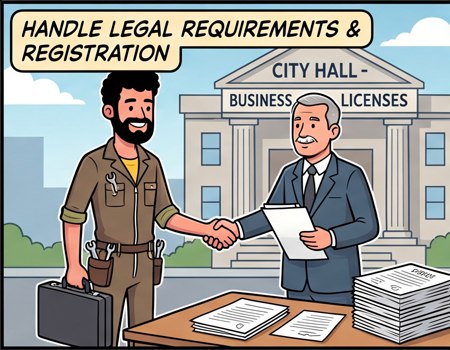
Handle Legal Requirements and Registration
Getting your business legally established protects you and builds credibility with customers.
Requirements vary by location, so verify specifics with your local government offices.
Getting your business legally established protects you and builds credibility with customers. Requirements vary by location, so verify specifics with your local government offices.
Choose Your Business Structure
The structure you choose affects liability, taxes, and operations.
Sole Proprietorship
Simplest OptionYou and the business are legally the same entity, making setup easy but leaving you personally liable for all business debts and lawsuits. You simply file a DBA (Doing Business As) name with your county and start operating.
LLC (Limited Liability Company)
RecommendedProtects your personal assets if your business gets sued. If you accidentally damage a $60,000 vehicle and your insurance doesn’t cover it, your house and savings remain protected.
Corporation
For Larger OperationsSuits larger operations with investors or plans for significant expansion. Most startups don’t need this complexity initially.
Register Your Business
Follow these steps to make your business official.
Choose a Business Name
Pick a memorable name that describes what you do and is easy to spell. Verify it’s not already in use in your area, then register it with your county or state.
Obtain an EIN
Get an Employer Identification Number from the IRS. This free number is used for tax filings and required for opening a business bank account. Apply online at IRS.gov for immediate processing.
Open a Business Bank Account
Separate personal and business finances. This simplifies accounting, strengthens liability protection if you have an LLC, and looks more professional when accepting payments.
Licenses and Permits Required
License requirements vary by state and locality, but here’s what you can generally expect.
General Business License
Required in most states to operate legally. Check with your city or county business registration office for the application process and fees.
Typically $50–$500State-Specific Requirements
Requires Car Washing and Polishing Registration through the Department of Industrial Relations at $300 per year per location, plus a surety bond of $150,000 for new applicants.
Has similar registration requirements.
Require only a general business license.
Seller’s Permit
Needed if you plan to sell car care products like detailing supplies, air fresheners, or other retail items alongside your services.
Additional Permits
- Zoning permits for fixed locations
- Mobile vendor permits for operating in certain jurisdictions
- Water discharge permits in some municipalities
Insurance You Need
Non-NegotiableInsurance protects your business and builds customer confidence. These coverages are essential.
General Liability Insurance
Covers bodily injury and property damage claims against your business. If a customer trips over your equipment or you damage their property, this coverage responds.
Garage Keeper’s Liability
Covers damage to customer vehicles while in your care, even if you didn’t cause it. If a tree falls on a car you’re detailing or someone breaks into your work area and damages the vehicle, you’re covered.
Absolutely EssentialCommercial Auto Insurance
Protects your mobile detailing vehicle and equipment. Personal auto insurance doesn’t cover business use, so you need commercial coverage if you’re driving to customer locations.
Workers’ Compensation
Required in most states if you have employees. Covers medical costs and lost wages from job-related injuries.
Equipment and Theft Insurance
Helps replace stolen tools, supplies, or business equipment whether you’re mobile or shop-based.
Contracts and Legal Documents
Protect yourself with proper documentation.
Service Agreements
Outline what you’ll provide, pricing, and terms. Written agreements prevent misunderstandings and demonstrate professionalism.
Release and Waiver of Liability
Can help protect against claims for pre-existing damage or risks inherent in the services provided. Have customers acknowledge any existing damage before you begin work.
Payment Terms and Cancellation Policies
Should be clear and communicated upfront. Define when payment is due, accepted methods, and what happens if customers cancel appointments.
Step 5
Get the Right Equipment and Supplies
People are holding onto their cars longer than ever, nearly 13 years on average and when they’re not buying new, they’re paying to keep what they have looking sharp.
That’s why the U.S. car detailing market is on track to hit $20.2 billion.
The best part?
You can start a car detailing business for as little as $500. No fancy shop needed. Solo mobile detailers regularly pull in $50,000 to $100,000 a year, and larger operations can clear $75,000+ per month.
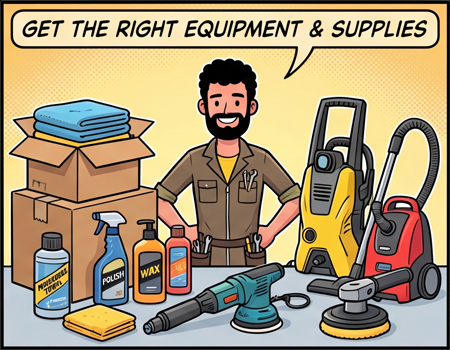
Your equipment directly impacts the quality of your work. Start with essentials and upgrade as revenue allows.
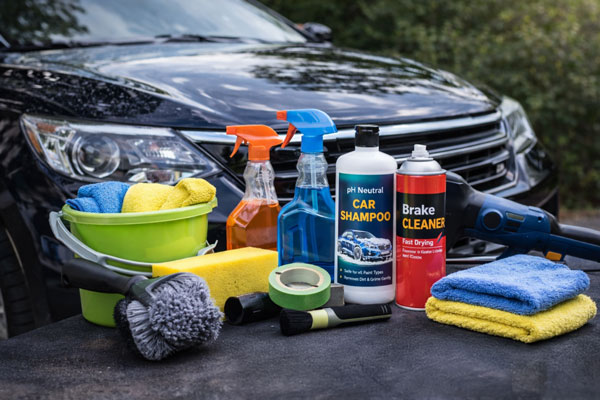
The Essential “Big 5”
Every car detailing business needs these five core equipment categories
Pressure Washer
$120–$500Delivers high-pressure water to remove dirt, grime, and road salt without scratching paint. For mobile work, electric models work best—quieter and lighter than gas-powered units.
Vacuum/Extractor
$60–$300Handles interior cleaning. A solid shop vacuum removes loose dirt and debris. If budget allows, invest in a wet/dry extractor which lets you shampoo carpets and upholstery.
Dual-Action Polisher
$80–$400Removes swirl marks and light scratches from paint. Dual-action polishers are safer for beginners than rotary polishers because they’re harder to damage paint with.
Chemicals and Solutions
$50–$100Your cleaning arsenal. Essential products include pH-neutral car soap, all-purpose cleaner and degreaser, tire shine, and spray sealant or wax.
Microfiber Towels
$25–$50Your primary tool for applying products and drying surfaces. You’ll need 20–30 towels to start, with separate towels designated for wheels, paint, glass, and interior.
Startup Equipment by Budget Level
Your investment level should match your goals and financial situation.
The lean $500 approach lets you validate the business before committing significant resources. This budget covers a pressure washer, shop vacuum, basic polisher, starter chemical kit, and enough microfiber towels to complete quality work. Many successful detailers started exactly this way.
Mobile Setup Requirements
Beyond detailing equipment, mobile operations require infrastructure.
Reliable Vehicle
Whether you use a cargo van, SUV, or trailer, it must be dependable. Breaking down on the way to a customer destroys your reputation.
Cargo vans are the gold standard for mobile detailingWater Storage
Typically tanks of 50–100 gallons. Calculate how much water you need per vehicle and how many vehicles you’ll service between refills.
Optimum No Rinse reduces usage to ~2 gallons per carPower Supply
Generators provide consistent power but create noise. Battery systems run quietly but require recharging between jobs.
Choose based on work environment and client expectationsOrganized Storage
Install racks, shelving, and modular organization systems designed for auto detailing.
Reduces setup time and prevents leaving tools behindShop Setup Requirements
Fixed locations need additional infrastructure considerations.
Adequate Space
Accommodate vehicles comfortably with room for movement around them, plus storage for all equipment and supplies. Consider traffic flow for bringing vehicles in and out.
Proper Lighting
Essential for paint correction work. Professional detailers use dedicated lighting systems that reveal defects invisible under standard lighting.
Water Access and Drainage
Must meet local codes. You may need specific permits for water discharge and appropriate systems for managing runoff.
Climate Control
Matters for ceramic coating and PPF installation, which require specific temperature and humidity ranges for proper application.
Where to Buy Equipment
Shop strategically to maximize your budget.
Amazon
Fast shipping and easy returns. Ideal for comparing prices across brands with customer reviews to guide decisions.
Harbor Freight
Budget tools like buckets, brushes, and extension cords. Pressure washers and polishers are hit-or-miss—read reviews carefully.
Chemical Guys & Meguiar’s
Starter kits bundle essential products at better prices. A $79 kit might include products that cost $140+ separately.
Facebook Marketplace
Used polishers, extractors, and equipment at 50–60% off retail. Many detailers upgrade and sell starter gear at discounts.
Detail King & Similar
Professional-grade equipment with training programs. Makes sense as you advance and need higher-quality tools.
Step 6
Set Your Pricing and Service Menu
People are holding onto their cars longer than ever, nearly 13 years on average and when they’re not buying new, they’re paying to keep what they have looking sharp.
That’s why the U.S. car detailing market is on track to hit $20.2 billion.
The best part?
You can start a car detailing business for as little as $500. No fancy shop needed. Solo mobile detailers regularly pull in $50,000 to $100,000 a year, and larger operations can clear $75,000+ per month.
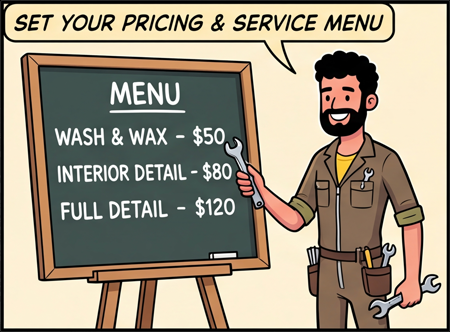
Profitable pricing balances competitiveness with adequate margins. Research your market, understand your costs, and structure offerings that make sense for customers while protecting your bottom line.
Pricing Methods
Different pricing approaches suit different business models.
Flat Rate by Service
Charges set prices for specific services like interior detailing, exterior detailing, or full details. Customers appreciate knowing exactly what they’ll pay upfront.
Risk: Some jobs take longer than expected, eating into profitHourly Rate
Ensures you’re compensated for your time regardless of job complexity. However, many customers prefer knowing their total cost in advance.
Benchmark: Average detailer earns $16–$25/hour as employeeBy Vehicle Size
Adjusts pricing based on the work involved. Fairly compensates for additional time and materials larger vehicles require.
Industry Pricing Benchmarks
Current market rates provide a starting point for your pricing decisions.
Regional variations exist, so research rates in your specific area. Urban markets and areas with higher costs of living typically support higher pricing. Your experience level also matters—as you build expertise and reputation, you can command premium rates.
Creating Profitable Service Packages
Packages simplify customer decisions and can increase your average ticket price.
Price bundling combines related services at a single price, often slightly less than purchasing each service individually. This approach increases value perception while encouraging customers to choose more comprehensive options.
- Basic exterior wash
- Interior vacuum
- Wipe-down
- Full exterior wash
- Clay bar treatment
- Complete interior cleaning
- Everything in Premium
- Paint sealant
- Leather conditioning
- Engine bay cleaning
Tiered Pricing Structure
Present good-better-best options side by side. This lets customers self-select based on needs and budget while guiding many toward middle or higher tiers.
Basic wash and vacuum, quick interior wipe-down
Full exterior cleaning with spray wax, thorough interior cleaning with protectants
Complete detail with clay bar, machine polish, premium protection, and deep interior extraction
Present packages using comparison tables on your website and printed materials. Highlighting the middle option as “most popular” guides customers toward it, while your premium tier anchors higher price expectations.
Calculating Your Prices for Profit
Use this formula to ensure profitable pricing:
Example Calculation
This calculation ensures you cover all costs while building profit. Adjust your hourly rate target based on local market conditions and your experience level.
Upselling Premium Services
Add-on services boost revenue without requiring additional customers.
Clay Bar Treatment
$100–$150Removes embedded contaminants and prepares paint for protection. Many customers don’t realize their vehicle needs this until you explain the benefit.
Ceramic Spray Coating
$75–$150Adds lasting protection during a detail appointment. Position this as extended value rather than an expense.
Pet Hair Removal
$30–$50Addresses a specific problem many pet owners desperately want solved. The specialized tools and extra time justify the additional charge.
Engine Bay Cleaning
$50–$100Appeals to enthusiasts and those preparing vehicles for sale.
Train yourself to mention relevant add-ons during every customer interaction. Frame them as recommendations based on what you observe about their specific vehicle.
Step 7
Market Your Car Detailing Business
People are holding onto their cars longer than ever, nearly 13 years on average and when they’re not buying new, they’re paying to keep what they have looking sharp.
That’s why the U.S. car detailing market is on track to hit $20.2 billion.
The best part?
You can start a car detailing business for as little as $500. No fancy shop needed. Solo mobile detailers regularly pull in $50,000 to $100,000 a year, and larger operations can clear $75,000+ per month.
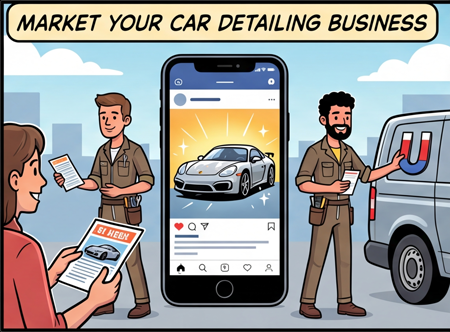
Effective marketing gets customers through the door. In 2026, that means combining strong digital presence with local relationship-building.
This is the area where most detailers either thrive or struggle. You can be the best detailer in your city, but if nobody knows you exist, you won’t have customers to serve.

Build Your Online Presence
Your digital presence determines whether potential customers find you.
Your Website
Serves as your digital business card. It tells potential customers what you do, what you charge, and how to book.
- Mobile-responsive design (73% of searches happen on phones)
- Clear service menu with pricing
- Before-and-after photo gallery
- Easy online booking functionality
- Customer reviews and testimonials
- Prominent contact information
Google Business Profile
FreeCritical for local visibility. When someone searches “car detailing near me,” your optimized profile helps you appear in results.
- Complete all information accurately
- Add high-quality photos regularly
- Collect and respond to reviews
- Post updates and offers
Detailer Systems clients get a professionally designed, conversion-optimized website built specifically for car detailers—plus automated Google review requests that build your online reputation on autopilot.
Social Media Strategy
Different platforms serve different purposes for your marketing.
Local Marketing Tactics
Digital marketing works best when combined with local relationship-building.
Strategic Partnerships
Generate referrals from complementary businesses.
- Car dealerships — Detail vehicles before delivery to new buyers
- Auto repair shops — Mutual referral arrangements
- Window tinting shops — Serve similar customers
- Real estate agents — Make vehicles look great for client meetings
Community Involvement
Builds your local reputation and visibility.
- Participate in local car shows and meets
- Join your Chamber of Commerce
- Sponsor local events or youth sports
- Demonstrate community investment
Referral and Loyalty Programs
Word-of-mouth remains powerful for service businesses. Structure programs that encourage it.
Referral Incentives
Reward customers who bring you new business. Offer a discount on their next service when someone they referred becomes a customer.
Loyalty Programs
Encourage repeat business and make customers feel valued while creating reasons to return.
- Digital punch cards
- Membership pricing for regulars
- Subscription maintenance plans
Email Marketing
Build an email list and use it strategically.
Collect Email Addresses
Through your website booking process, at community events, and after completing services.
What to Send
- Maintenance reminders — When customers are likely due for their next detail
- Seasonal promotions — Relevant to current conditions
- Car care tips — Provide value without selling
Keep emails focused and not too frequent. Monthly communication maintains awareness without becoming annoying.
Our platform automatically sends perfectly-timed follow-up emails and text messages that bring customers back for repeat services.
No more letting customers slip through the cracks.
Paid Advertising
Paid advertising accelerates customer acquisition when you’re ready to invest.
Google Ads
Targets people actively searching for detailing services. When someone searches “car detailing near me” or “mobile detailing [your city],” your ad can appear at the top of results.
Facebook & Instagram Ads
Target users based on location, demographics, and interests. Reach local vehicle owners who haven’t yet searched for your services but match your ideal customer profile.
Step 8
Land Your First Paying Customers
People are holding onto their cars longer than ever, nearly 13 years on average and when they’re not buying new, they’re paying to keep what they have looking sharp.
That’s why the U.S. car detailing market is on track to hit $20.2 billion.
The best part?
You can start a car detailing business for as little as $500. No fancy shop needed. Solo mobile detailers regularly pull in $50,000 to $100,000 a year, and larger operations can clear $75,000+ per month.
Getting your first customers requires hustle and creativity. Here’s a proven approach.
Start with Your Network
Your existing relationships are your first marketing resource.
Detail 2–3 Cars Free or Discounted
Choose vehicles that need real work so your before-and-after photos are impressive. Friends and family understand you’re building a business and are usually happy to help.
Document Everything
High-quality photos in natural light. These images become marketing assets for your website, social media, and printed materials.
Ask for Testimonials & Referrals
People who know and trust you are often willing to recommend you to others.
The “First 5 Customers” Strategy
This systematic approach builds momentum quickly.
Complete 2–3 free or heavily discounted details to generate photos and testimonials
Offer “founders pricing” to your first five paying customers at 20–30% below regular rates. Position as an exclusive early offer
Ask each satisfied customer for two referrals. Offer an incentive like a discount on their next service
Post every job on social media with before-and-after photos. Build your portfolio publicly and consistently
Request Google reviews from every customer. Reviews are critical for local search visibility and credibility
Where to Find Early Customers
Multiple channels can generate your first paying clients.
Nextdoor & Facebook Groups
Connect with neighbors and community members. Introduce yourself professionally, share your work, and be genuinely helpful rather than constantly selling.
Local Business Directories
List service providers for various categories. Ensure you’re listed on relevant platforms for your area.
Door-to-Door Flyers
Target neighborhoods with driveways, higher-income demographics, or visible car enthusiasts. Still works.
Business Cards
Strategic locations like auto parts stores, coffee shops, and gyms keep your name in circulation.
Converting Inquiries to Bookings
Getting inquiries is only half the battle—you need to turn them into customers.
Respond Quickly
Aim for within one hour during business hours. Fast responses demonstrate professionalism and often determine who gets the job when customers contact multiple providers.
Be Clear About Services & Pricing
Don’t make customers guess what they’ll get or what they’ll pay. Confusion kills conversions.
Make Booking Easy
Online scheduling tools remove friction from the booking process. The fewer steps between inquiry and confirmed appointment, the better your conversion rate.
Follow Up on Quotes
If someone requests information but doesn’t book, follow up within 24–48 hours. A simple message asking if they have questions often converts hesitant prospects.
Detailer Systems automatically follows up with leads who don’t book, sends appointment reminders to reduce no-shows, and re-engages past customers when they’re due for service.
It’s like having a full-time marketing assistant working 24/7.Step 9
Grow and Scale Your Detailing Business
People are holding onto their cars longer than ever, nearly 13 years on average and when they’re not buying new, they’re paying to keep what they have looking sharp.
That’s why the U.S. car detailing market is on track to hit $20.2 billion.
The best part?
You can start a car detailing business for as little as $500. No fancy shop needed. Solo mobile detailers regularly pull in $50,000 to $100,000 a year, and larger operations can clear $75,000+ per month.
Once you’ve established your business, growth opportunities expand.
When to Expand
Certain signals indicate readiness for growth.
You’re consistently booked 2+ weeks in advance—demand exceeds your capacity
You’re regularly turning away customers or extending wait times beyond acceptable
Your revenue comfortably supports hiring or additional investment
You’re confident in your systems enough to teach them to others
Adding Premium Services
Premium services dramatically increase revenue per customer.
Ceramic Coating Certification
$500–$2,000 per jobInvest in training and quality products to deliver results that justify premium pricing. Many customers specifically seek certified installers.
Paint Protection Film (PPF)
High ticket pricesComprehensive coverage offers even higher revenue. This skill takes practice but creates significant earning potential with the right customer base.
Paint Correction Specialization
Premium ratesCommands premium rates from enthusiasts and owners of high-end vehicles. Developing expertise opens lucrative opportunities.
Fleet & Corporate Accounts
Recurring revenueProvides consistent volume and recurring revenue. Businesses with vehicle fleets need regular maintenance—securing even one account can stabilize your monthly income.
Hiring Your First Employee
Adding help extends your capacity without requiring you to work more hours.
Start Part-Time
Manage risk and ensure you can keep someone busy before committing to full-time.
Train Thoroughly
Your reputation depends on consistent quality regardless of who performs the work.
Pay Competitive Wages
Lower wages attract lower commitment and higher turnover, which ultimately costs more than paying well from the start.
Document Processes
So training is consistent and expectations are clear for everyone on your team.
Remember: Workers’ compensation insurance becomes required when you have employees. Factor this cost into your hiring decision.
Systems and Automation
Scaling requires systems that don’t depend on your personal attention.
Scheduling Software
Manages appointments and prevents conflicts. Customers appreciate the ability to book online at their convenience.
Customer Relationship Management (CRM)
Tracks customer history, preferences, and communication. Knowing what services each customer has received helps you make relevant recommendations.
Automated Reminders & Follow-ups
Reduce no-shows and encourage repeat business without manual effort.
Online Booking & Payments
Streamline transactions and reduce administrative time.
Inventory Tracking
Ensures you don’t run out of essential supplies mid-job.
This is where many detailers hit a ceiling. They’re great at detailing but spend evenings answering messages, following up on leads, and trying to remember who needs a reminder.
Detailer Systems handles all of this automatically, so you can scale without working more hours.
2026 Car Detailing Trends to Watch
Staying ahead of trends helps you stand out and charge premium rates. Here’s what’s shaping the industry right now.
Protection Services Are Evolving Fast
Graphene coatings are the new buzz. They outperform traditional ceramics with better heat resistance, fewer water spots, and surfaces that stay cleaner longer thanks to anti-static properties. If you’re not offering graphene yet, it’s worth learning.
Paint protection film (PPF) isn’t just for Lamborghinis anymore. More everyday drivers want real protection against rock chips and scratches. The newer films even self-heal minor scratches with heat—customers love that.
The gold standard in 2026? Combining PPF on high-impact areas (hood, bumper, mirrors) with ceramic coating on the rest. It’s the best of both worlds, and clients will pay for it.
XPEL survey shows PPF can increase vehicle resale value by up to 15%
Source: Research Nester →Eco-Friendly Is No Longer Optional
Water restrictions are real in many areas, and customers increasingly care about sustainability.
Waterless wash systems cut water usage by up to 90% and deliver great results. If you’re mobile, this can be a game-changer—no more hunting for water access.
Plant-based, biodegradable products are gaining traction too. Offering eco-friendly options isn’t just good for the planet—it’s a selling point.
Waterless wash systems reduce water consumption by up to 90%—a competitive edge in drought-prone areas and for mobile detailers.
Tech That Actually Helps
You don’t need to go full sci-fi, but some tools genuinely save time:
Measure clear coat thickness and spot defects you might miss. Less risk of burning through paint during correction.
Handles bookings and follow-ups automatically. (This is exactly what Detailer Systems does—so you’re detailing cars, not chasing customers.)
Look professional and get you paid faster.
Electric Vehicles = Growing Opportunity
EVs have different interior materials and specific care needs. Learning EV-specific detailing now positions you for a market that’s only getting bigger.
Your Car Detailing Business
Starts Today
You now have a complete roadmap for starting a car detailing business in 2026.
Here’s your 9-step game plan:
Choose Your Business Model
Mobile, shop, or hybrid? Pick based on your resources and goals. Mobile = lowest barrier, maximum flexibility.
FOUNDATIONDevelop Your Skills
Training, practice, repeat. Quality work isn’t optional—it’s your entire reputation.
SKILLSCreate a Business Plan
Your roadmap for decisions. Keeps you accountable when things get real.
STRATEGYHandle Legal Requirements
Registration, licenses, insurance. Boring but essential—protect yourself.
LEGALGet the Right Equipment
Start with essentials, upgrade as you grow. $500 can get you started.
TOOLSSet Profitable Pricing
Research the market, know your costs, package it smart. Don’t undersell yourself.
MONEYMarket Your Business
Digital presence, social proof, local relationships. Be everywhere your customers are.
GROWTHLand Your First Customers
Network, hustle, follow up. Your first 5 customers become your first 50.
ACTIONScale Strategically
Premium services, hire help, build systems. Grow without burning out.
SCALEThe car detailing industry offers real opportunity. Start with minimal investment, build skills that command premium rates, create a business that fits your life. The demand is there—people are keeping cars longer and paying to maintain them.
The only question: Will you take action?
Ready to Focus on What You Love?
Detailer Systems gives you everything you need to attract customers, book appointments, and grow your business—without spending hours on marketing you don’t enjoy.
Book a Free DemoJoin hundreds of detailers building thriving businesses
FAQs about “How to start a car Detailing Business”
Got questions? We’ve answered the most common ones from people starting their detailing journey. If you don’t find what you’re looking for, feel free to reach out.
How much does it cost to start a car detailing business?
Startup costs range from $500 for a basic mobile setup to $50,000 or more for a fixed-location shop. Most new detailers invest $3,000 to $10,000 for a professional mobile operation that can deliver quality results and grow.
Do I need a license to start a car detailing business?
Requirements vary by state. Most states require only a general business license. California and New York have specific car wash and detailing registration requirements. Check with your local government offices for your specific requirements.
How much can I make with a car detailing business?
Solo mobile detailers typically earn $50,000 to $100,000 or more per year depending on their market, pricing, and hours worked. Larger operations with employees can generate $75,000 or more per month. Profit margins of 60-80% are achievable for well-run solo operations.
What insurance do I need for a car detailing business?
Essential coverage includes general liability insurance and garage keeper’s liability insurance, which covers damage to customer vehicles in your care. Mobile detailers also need commercial auto insurance. If you have employees, workers’ compensation insurance is typically required.
Is a car detailing business profitable?
Yes, car detailing can be highly profitable with margins of 60-80% for solo operators. Profitability depends on your pricing strategy, operating efficiency, and how effectively you market your services. Premium services like ceramic coating significantly increase profit potential.
How do I get customers for my detailing business?
Start with friends and family to build your portfolio. Optimize your Google Business Profile for local search visibility. Post consistently on social media with before-and-after photos. Partner with local businesses for referrals. Ask satisfied customers for reviews and referrals. Or let Detailer Systems handle your marketing automation so customers come to you.
Can I start a car detailing business from home?
Many detailers operate mobile businesses from home, traveling to customer locations. If you want to detail vehicles at your residence, check local zoning laws first. Many residential areas restrict commercial activities, though purely mobile operations where you travel to customers are usually compliant.
What equipment do I need to start a car detailing business?
Essential equipment includes a pressure washer, vacuum or extractor, dual-action polisher, basic chemicals and cleaning solutions, and microfiber towels. Mobile operations also need a reliable vehicle, water storage, and power supply. Start with basics and upgrade as you grow.
The all-in-one marketing platform built specifically for car detailers. We help detailing businesses attract more customers, automate follow-up, and grow revenue—without the marketing headaches.